

Fika-to-fika workshop in Lund and online 1 October 2025.
Following on from the successful workshops on Regulating High Risk AI in the EU (2023), and Compliance and Enforcement (2024), AI Lund’s fika-to-fika workshops* returns to the AI Act with a focus on legal aspects related to “transparency”.
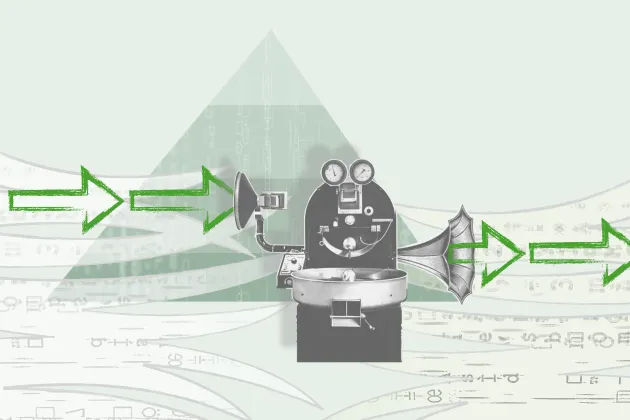
The EU AI Act (Regulation (EU) 2024/1689) marks a groundbreaking shift in AI regulation, laying the foundation for a potential global standard in AI governance, risk management, and transparency. A key pillar of the Act is data transparency, i.e., the ability to understand and audit training data, algorithmic processes and AI output.
For example, the Act establishes the following obligations:
- During AI training (machine learning): Ensuring high-quality, unbiased, and representative training datasets.
- Inside the black box: Documenting and monitoring requirements related to algorithmic transparency, ensuring interpretability and traceability.
- AI output: Enabling human oversight, contestability, and post-market monitoring to mitigate risks and ensure accountability.
The AI Act also introduces transparency requirements to ensure that users are informed when interacting with an AI system. For example, AI systems generating synthetic content (such as deepfakes) must clearly label their outputs as artificially generated. Furthermore, providers of general-purpose AI models must meet specific disclosure obligations, including transparency regarding copyrighted content used for training models.
At the same time, questions remain about how the transparency obligations in the AI Act interact with other legal frameworks, including:
- Fundamental rights under the EU Charter
- Copyright protection for content used as training data in AI development
- Trade secret protection for training data and AI system operations
- Obligations under the General Data Protection Regulation (GDPR) regarding personal data protection
- Competition law restrictions on data access and potential abuse
Against this backdrop, this workshop—featuring leading experts, policymakers, and industry professionals—will explore how these requirements translate into real-world AI compliance strategies and what challenges remain in opening the black box while preserving innovation and competitiveness.
When: 1 October 2025.
Where:
- Stadshallen (Lund City Hall, Lund, Sweden): 9.00 to 15.30 CET
- Online: 9.25 to 12.00 and 13.00 to 15.15 CET
Spoken language: English
Programme
09.00 Registration open
09.25 Online meeting open
Online host: TBA
09.30 Presentations & Panels
Initial overview of Transparency in AI Systems
Stefan Larsson, Technology and Society, Lund University
Invited talk: Mapping competition concerns along the generative AI value chain
Kalpana Tyagi, International Law, Maastricht University
Copy right and Machine Learning
Johan Axhamn, Business Law, Lund University
TBA
Sebastian Schwemer, Law and Governance, Oslo Business School
—Short break—
Panel 1: Focus Transparency in Data Input
Moderator: Johan Axhamn, Business Law, Lund University
Panelists: TBA
Transparency in the GDPR and the AI Act – right to explanation of individual decision-making
Jonas Ledendal, Business Law, Lund University and Hajo Michael Holtz, Department of Law, Uppsala Universitet
Transparency as Fairness and Fairness as Transparency
Behrang Kianzad, Institute for Global Political Studies, Malmö University
When is an AI system transparent? Legal and non-legal meanings of AI transparency and their relation to Trustworthy AI
Kasia Söderlund, Technology and Society, Lund University
12.00 Lunch break
13.05 Online meeting opens
13.10 Presentations and Panels
Panel 2 Focus Transparency in AI Systems
Moderator: Behrang Kianzad, Institute for Global Political Studies, Malmö University
Panelists: TBA
Transparent but incomprehensible
Jacob Dexe, IAB
TBA
Ana Nordberg, Law, Lund University
The Logics of Transparency in the AI Act
Ida Koivisto, Law, University of Helsinki
—Short break—
Panel 3 focus Transparency in AI Output
Moderator: Jonas Ledendal, Business Law, Lund University
Panelists:
Janne Elvelid, Head of Public Policy Sweden and Finland, Facebook and TBA
TBA
Katja de Vries, Law, Uppsala University
Final words
Stefan Larsson, Technology and Society, Lund University
15.15 Coffee & mingle
Registration
To participate is free of charge. Welcome to sign up for participation on-site in Lund or online at ai.lu.se/2025-10-01/registration. Online participants will get a link for access the meeting at the zoom platform a couple of days before the event.
Organisation
- Johan Axhamn, Senior lecturer, Department of Business Law, Lund University
- Behrang Kianzad, Researcher, Department of Business Law
- Eduardo Gill-Pedro, Institute for Global Political Studies, Malmö University
- Jonas Ledendal, Senior lecturer, Department of Business Law, Lund University
- Stefan Larsson, Senior lecturer, Department of Technology and Society
- Jonas Wisbrant, AI Lund
The event is supported by the Nordic AI Hub funded by The Nordic Council of Ministers and the Nordic Council.
”Fika-to-fika” means that we start the day, not to early, with a Swedish fika with coffee and refreshment and end the day not to late with an afternoon ”fika” with the ambition to leave plenty of room in the programme for discussions and networking.
If you have any questions, please contact Jonas.Wisbrant@control.lth.se